
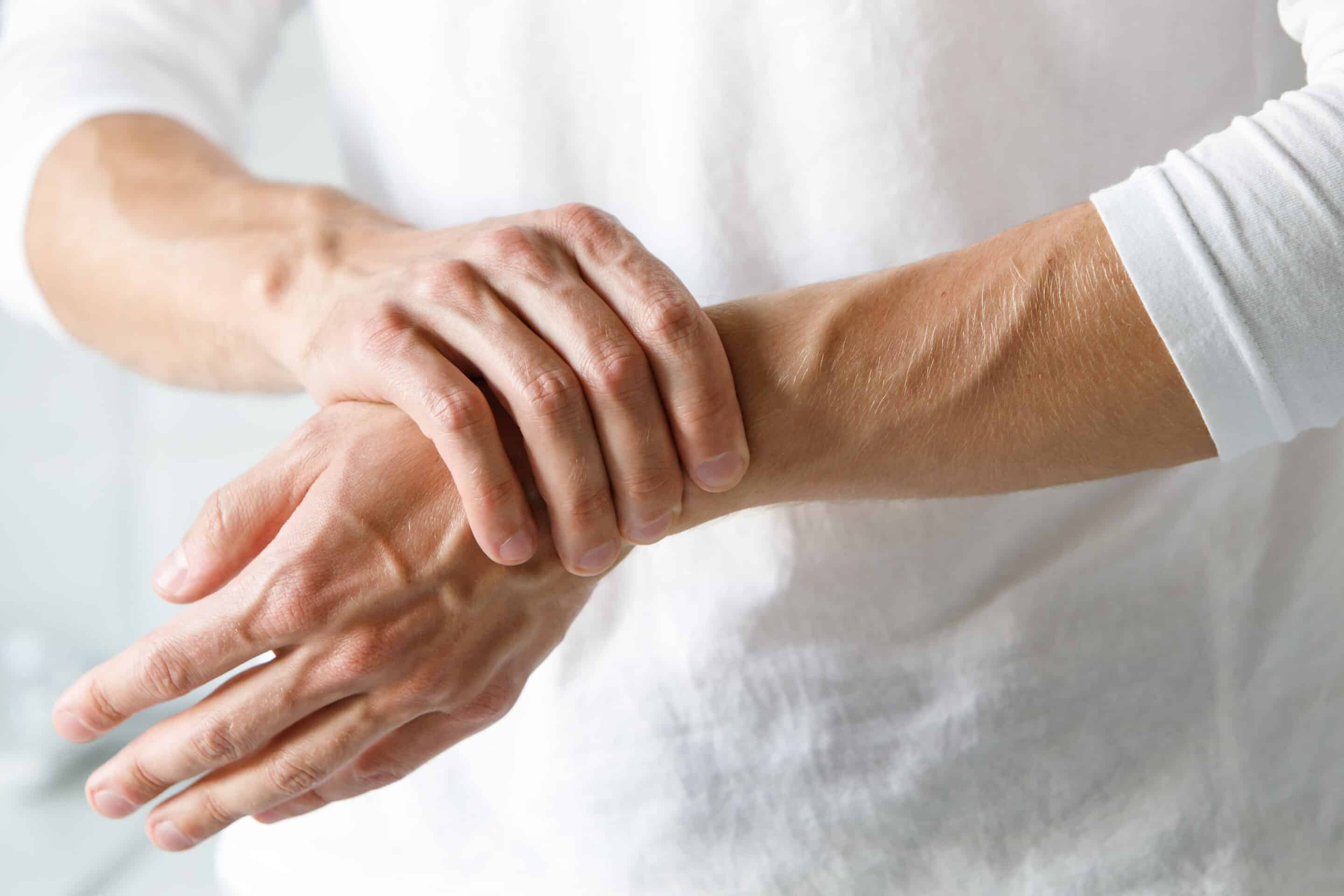
Back-to-school schedules are back, football season is kicking off, and everyone’s hands and wrists are suddenly working overtime: backpacks, binders, new practice reps, and busy mornings all in one. It’s exactly the kind of season when small hand and wrist injuries slip through the cracks.
Most people think of ortho injuries as the dramatic kind: a loud pop, a bone at the wrong angle, an ambulance ride. But a lot of hand and wrist injuries show up quietly. A jammed finger that never quite straightens out. A wrist that aches after every practice but “isn’t that bad.” A thumb that catches when you grip something.
Left alone, these smaller hand and wrist injuries can turn into bigger problems. Here’s what tends to get missed, why it matters, and what you can do about it.
The Hand and Wrist Injuries People Most Often Ignore
Some of the most common hand and wrist injuries are also the easiest to talk yourself out of treating. A few that show up again and again this time of year:
- Jammed or “stubbed” fingers. Common in football, basketball, and volleyball. Many people tape it up and keep playing, but a jammed finger can hide a small fracture or a torn ligament that needs attention to heal correctly.
- Mallet finger. This happens when the fingertip is struck (a common football and volleyball injury) and the tip droops instead of straightening. It looks minor, but it involves a tendon injury that usually needs splinting to heal properly.
- Thumb sprains (“skier’s thumb”). Often caused by a fall on an outstretched hand or a direct hit to the thumb, common in football when stiff-arming or blocking. If the ligament tears rather than stretches, it may not heal well without treatment.
- Scaphoid fractures. A fall onto an outstretched hand can fracture a small wrist bone called the scaphoid. It’s easy to mistake for a simple wrist sprain, but this bone can be slow to heal and sometimes needs extra attention if it’s missed early.
- TFCC (wrist) sprains. The triangular fibrocartilage complex, or TFCC, is a cushion of cartilage and ligaments on the pinky side of the wrist. Repetitive twisting or a fall can strain or tear it, causing clicking or aching that people often shrug off for months.
What Is De Quervain’s Tenosynovitis?
De Quervain’s tenosynovitis is inflammation of the tendons that run along the thumb side of the wrist. It happens when those tendons and their surrounding sheath become irritated, usually from repetitive thumb and wrist motion.
People often notice it as pain or tenderness at the base of the thumb, swelling along the wrist, or a “catching” feeling when gripping something or turning the wrist. It can be aggravated by activities like texting, scrolling, lifting a child, carrying a heavy backpack strap, or repetitive gripping in sports.
Because it builds up gradually, many people living with De Quervain’s tenosynovitis wait months before mentioning it to anyone, often assuming it’s just soreness that will work itself out.
Who These Hand and Wrist Injuries Affect
These injuries aren’t limited to any one age group or activity, but a few groups tend to notice them most during August and September:
- Student athletes returning to football, volleyball, and other fall sports after a summer with less conditioning
- Parents and caregivers managing new backpacks, school supply hauls, and lifting kids or car seats
- Anyone with a repetitive daily routine, including typing, texting, or gripping tools or equipment throughout the day
How These Injuries Are Evaluated and Treated
Treatment for hand and wrist injuries can range from simple at-home care to more involved options, depending on what’s actually going on:
- Rest, splinting, or bracing to support the area while it heals
- Ice and anti-inflammatory measures to help manage swelling and discomfort
- Hand therapy to restore motion, strength, and function
- Imaging, such as an X-ray, when a fracture or more significant injury is suspected
- In some cases, injections or surgery may be recommended for injuries that don’t improve with conservative care
A hand and wrist specialist can help determine which approach fits your specific injury, since what works well for a jammed finger may not be the right plan for a scaphoid fracture or De Quervain’s tenosynovitis.
Preventing Hand and Wrist Injuries This Season
A few habits can help lower the risk of these injuries, especially heading into fall sports and school routines:
- Warm up hands and wrists before practice or games, not just legs and shoulders
- Use properly fitted gloves, tape, or braces recommended for your sport
- Choose a backpack with padded, adjustable straps and avoid overloading it on one side
- Take short breaks from repetitive gripping or typing tasks to let tendons rest
- Address soreness early instead of playing or working through it
When to See a Provider
It’s a good idea to talk with a provider if you notice any of the following:
- A finger or wrist that doesn’t straighten, bend, or grip normally
- Swelling, bruising, or pain that lasts more than a few days
- A catching, clicking, or locking sensation in the thumb or wrist
- Pain that gets worse with activity instead of improving with rest
- Any injury that happened with a fall, direct hit, or audible pop
None of these symptoms mean something is seriously wrong, but a hand and wrist specialist can rule out fractures, tendon injuries, or ligament tears early, when they’re generally easier to treat.
Taking the Next Step
Most hand and wrist injuries respond well to care, especially when they’re addressed early rather than left to linger through a full season. If you or someone in your family is dealing with a nagging thumb, wrist, or finger issue this back-to-school and football season, it’s worth having it looked at. Schedule an appointment today.