
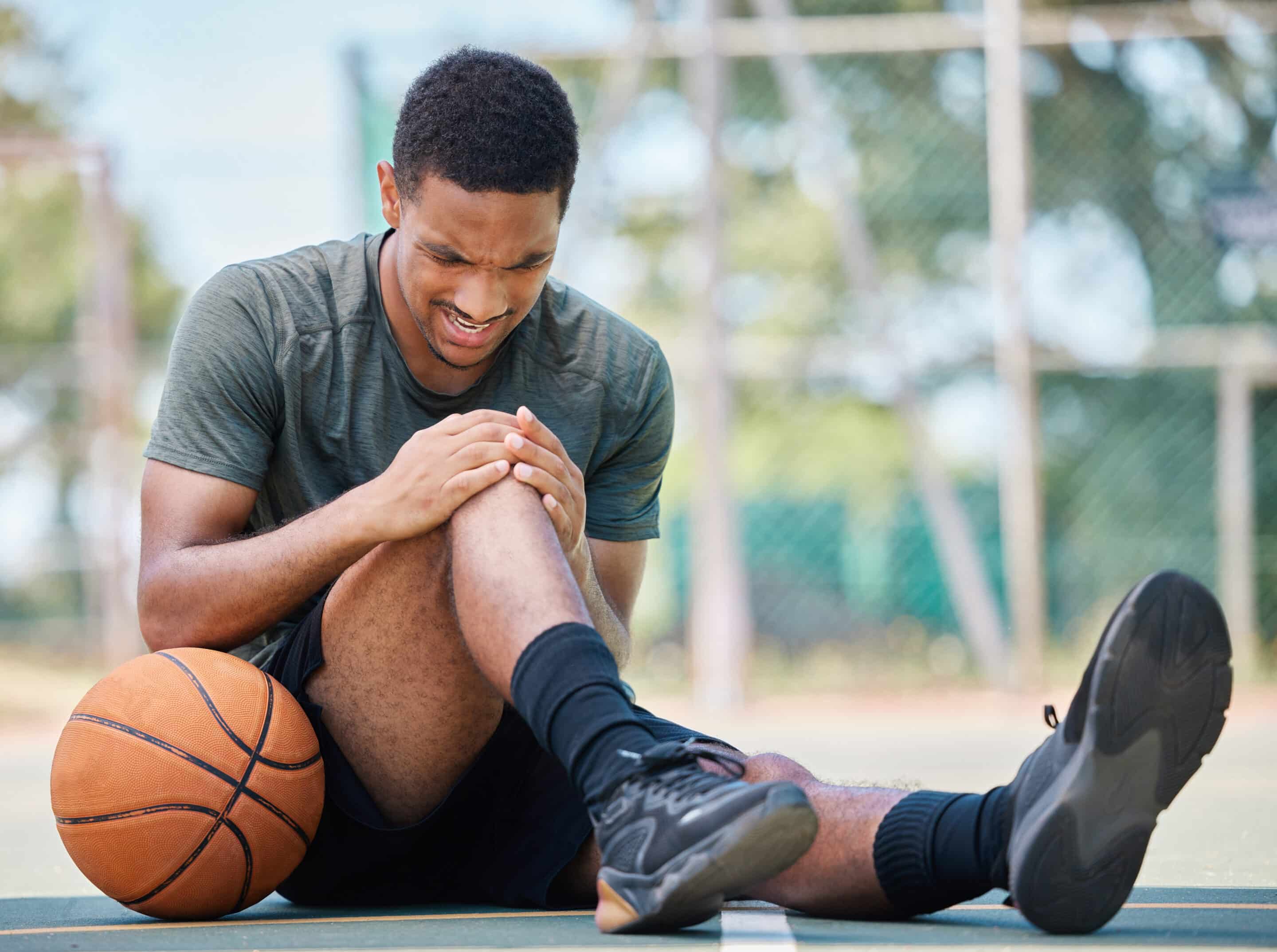
March Madness is here and at Lowcountry Orthopaedics, that means something a little different than bracket predictions. Every spring, as the college tournament tips off and pickup games multiply across the Lowcountry, we see a very predictable surge of patients walking through our doors. Whether you’re playing in a rec league, joining a neighborhood game inspired by the tournament, or just shooting around for the first time in months, basketball is one of the most physically demanding sports on your joints and ligaments. Here’s our real Final Four; the four injuries we treat most every spring, and what you should know about each one.
#1 Seed: Ankle Sprains
Ankle sprains are the undisputed number one in basketball. They happen when you land on the side of your foot, roll your ankle on a change of direction, or come down on another player’s foot after a jump. The ligaments stretch or tear, and suddenly you’re on the sideline. Most sprains can be managed without surgery. Rest, ice, compression, and elevation in the short term, followed by targeted physical therapy to restore strength and stability. The key is not to rush back too soon. An ankle that isn’t fully rehabilitated is far more likely to sprain again.
#2 Seed: Knee Injuries — ACL, Meniscus, and Patellar Tendinitis
The knee takes an enormous amount of stress in basketball. From jumping, pivoting, cutting, and landing. ACL tears get the most attention, and for good reason; they’re serious and often season-ending. But we also treat a high volume of meniscus injuries and patellar tendinitis (jumper’s knee) every spring. Not every knee injury requires surgery. Depending on the severity and your activity goals, many can be effectively managed with physical therapy, bracing, and targeted rehabilitation. If your knee locks up, gives way, or swells significantly after a game, that’s a signal to get it evaluated sooner rather than later.
#3 Seed: Finger Fractures and Jammed Fingers
They might seem minor, but finger injuries are one of the most frequently undertreated basketball injuries we see. A hard pass, a contested rebound, or a ball that hits the tip of a finger at the wrong angle can cause ligament damage or a fracture that looks like a simple jam. Many people tape it and play through it, and end up with long-term stiffness or instability that could have been avoided with proper early care. If a finger is significantly swollen, misaligned, or painful beyond a day or two, have it imaged. A true fracture or ligament tear treated early heals far better than one discovered weeks later.
#4 Seed: Stress Fractures and Overuse Injuries
This one catches weekend warriors by surprise. When you go from minimal activity to full-court basketball, especially on hard surfaces, your bones and soft tissue haven’t had time to adapt. Stress fractures in the foot and shin are a common result, and they can sneak up on you gradually rather than announcing themselves with a single moment of injury. If you notice a dull ache that gets worse during activity and better with rest, don’t ignore it. Continuing to play on a stress fracture can turn a manageable injury into a much longer recovery.
Stay in the Game This Spring
You don’t have to sit out the season to stay injury-free, you just need to know when something needs attention. At Lowcountry Orthopaedics, our sports medicine team is here to get you evaluated, treated, and back on the court as quickly and safely as possible. Contact us today to schedule an appointment, and let’s keep you playing all the way through the final buzzer.